CryptoParty (Crypto-Party) is a grassroots global endeavour to introduce the basics of practical cryptography such as the Tor anonymity network, I2P, Freenet, key signing parties, disk encryption and virtual private networks to the general public. The project primarily consists of a series of free public workshops. == History == As a successor to the Cypherpunks of the 1990s, CryptoParty was conceived in late August 2012 by the Australian journalist Asher Wolf in a Twitter post following the passing of the Cybercrime Legislation Amendment Bill 2011 and the proposal of a two-year data retention law in that country, the Cybercrime Legislation Amendment Bill 2011. The DIY, self-organizing movement immediately went viral, with a dozen autonomous CryptoParties being organized within hours in cities throughout Australia, the US, the UK, and Germany. Many more parties were soon organized or held in Chile, The Netherlands, Hawaii, Asia, etc. Tor usage in Australia itself spiked, and CryptoParty London with 130 attendees—some of whom were veterans of the Occupy London movement—had to be moved from London Hackspace to the Google campus in east London's Tech City. As of mid-October 2012 some 30 CryptoParties have been held globally, some on a continuing basis, and CryptoParties were held on the same day in Reykjavik, Brussels, and Manila. The first draft of the 442-page CryptoParty Handbook (the hard copy of which is available at cost) was pulled together in three days using the book sprint approach, and was released 2012-10-04 under a CC BY-SA license. === Edward Snowden involvement === In May 2014, Wired reported that Edward Snowden, while employed by Dell as an NSA contractor, organized a local CryptoParty at a small hackerspace in Honolulu, Hawaii on December 11, six months before becoming well known for leaking tens of thousands of secret U.S. government documents. During the CryptoParty, Snowden taught 20 Hawaii residents how to encrypt their hard drives and use the Internet anonymously. The event was filmed by Snowden's then-girlfriend, but the video has never been released online. In a follow-up post to the CryptoParty wiki, Snowden pronounced the event a "huge success." == Media response == In 2013, CryptoParty received messages of support from the Electronic Frontier Foundation and (purportedly) AnonyOps, as well as the NSA whistleblower Thomas Drake, WikiLeaks central editor Heather Marsh, and Wired reporter Quinn Norton. Eric Hughes, the author of A Cypherpunk's Manifesto nearly two decades before, delivered the keynote address, Putting the Personal Back in Personal Computers, at the Amsterdam CryptoParty on 2012-09-27. Marcin de Kaminski, founding member of Piratbyrån which in turn founded The Pirate Bay, regarded CryptoParty as the most important civic project in cryptography in 2012, and Cory Doctorow has characterized a CryptoParty as being "like a Tupperware party for learning crypto." Der Spiegel in December 2014 mentioned "crypto parties" in the wake of the Edward Snowden leaks in an article about the NSA.
Quickly (software)
Quickly is a framework for creating software programs for a Linux distribution using Python, PyGTK, Glade Interface Designer and Desktop Couch. It then allows for easy publishing using bzr and Launchpad. Quickly is designed to speed up the start of new projects with the use of templates, not only for programs but for any type of project. These templates are used to automate project configuration and maintenance. Delegating into templates and not into a specific library allows projects created using Quickly not to require dependencies on any particular library or runtime of Quickly itself. The project was started by Rick Spencer after his frustration as a beginner Ubuntu developer. == Updates == Last available software update is on 2013-01-31 for Ubuntu 11.04.
Level-set method
The Level-set method (LSM) is a conceptual framework for using level sets as a tool for numerical analysis of surfaces and shapes. LSM can perform numerical computations involving curves and surfaces on a fixed Cartesian grid without having to parameterize these objects. LSM makes it easier to perform computations on shapes with sharp corners and shapes that change topology (such as by splitting in two or developing holes). These characteristics make LSM effective for modeling objects that vary in time, such as an airbag inflating or a drop of oil floating in water. == Overview == The figure on the right illustrates several ideas about LSM. In the upper left corner is a bounded region with a well-behaved boundary. Below it, the red surface is the graph of a level set function φ {\displaystyle \varphi } determining this shape, and the flat blue region represents the X-Y plane. The boundary of the shape is then the zero-level set of φ {\displaystyle \varphi } , while the shape itself is the set of points in the plane for which φ {\displaystyle \varphi } is positive (interior of the shape) or zero (at the boundary). In the top row, the shape's topology changes as it is split in two. It is challenging to describe this transformation numerically by parameterizing the boundary of the shape and following its evolution. An algorithm can be used to detect the moment the shape splits in two and then construct parameterizations for the two newly obtained curves. On the bottom row, however, the plane at which the level set function is sampled is translated upwards, on which the shape's change in topology is described. It is less challenging to work with a shape through its level-set function rather than with itself directly, in which a method would need to consider all the possible deformations the shape might undergo. Thus, in two dimensions, the level-set method amounts to representing a closed curve Γ {\displaystyle \Gamma } (such as the shape boundary in our example) using an auxiliary function φ {\displaystyle \varphi } , called the level-set function. The curve Γ {\displaystyle \Gamma } is represented as the zero-level set of φ {\displaystyle \varphi } by Γ = { ( x , y ) ∣ φ ( x , y ) = 0 } , {\displaystyle \Gamma =\{(x,y)\mid \varphi (x,y)=0\},} and the level-set method manipulates Γ {\displaystyle \Gamma } implicitly through the function φ {\displaystyle \varphi } . This function φ {\displaystyle \varphi } is assumed to take positive values inside the region delimited by the curve Γ {\displaystyle \Gamma } and negative values outside. == The level-set equation == If the curve Γ {\displaystyle \Gamma } moves in the normal direction with a speed v {\displaystyle v} , then by chain rule and implicit differentiation, it can be determined that the level-set function φ {\displaystyle \varphi } satisfies the level-set equation ∂ φ ∂ t = v | ∇ φ | . {\displaystyle {\frac {\partial \varphi }{\partial t}}=v|\nabla \varphi |.} Here, | ⋅ | {\displaystyle |\cdot |} is the Euclidean norm (denoted customarily by single bars in partial differential equations), and t {\displaystyle t} is time. This is a partial differential equation, in particular a Hamilton–Jacobi equation, and can be solved numerically, for example, by using finite differences on a Cartesian grid. However, the numerical solution of the level set equation may require advanced techniques. Simple finite difference methods fail quickly. Upwinding methods such as the Godunov method are considered better; however, the level set method does not guarantee preservation of the volume and shape of the set level in an advection field that maintains shape and size, for example, a uniform or rotational velocity field. Instead, the shape of the level set may become distorted, and the level set may disappear over a few time steps. Therefore, high-order finite difference schemes, such as high-order essentially non-oscillatory (ENO) schemes, are often required, and even then, the feasibility of long-term simulations is questionable. More advanced methods have been developed to overcome this; for example, combinations of the leveling method with tracking marker particles suggested by the velocity field. == Example == Consider a unit circle in R 2 {\textstyle \mathbb {R} ^{2}} , shrinking in on itself at a constant rate, i.e. each point on the boundary of the circle moves along its inwards pointing normally at some fixed speed. The circle will shrink and eventually collapse down to a point. If an initial distance field is constructed (i.e. a function whose value is the signed Euclidean distance to the boundary, positive interior, negative exterior) on the initial circle, the normalized gradient of this field will be the circle normal. If the field has a constant value subtracted from it in time, the zero level (which was the initial boundary) of the new fields will also be circular and will similarly collapse to a point. This is due to this being effectively the temporal integration of the Eikonal equation with a fixed front velocity. == Applications == In mathematical modeling of combustion, LSM is used to describe the instantaneous flame surface, known as the G equation. Level-set data structures have been developed to facilitate the use of the level-set method in computer applications. Computational fluid dynamics Trajectory planning Optimization Image processing Computational biophysics Discrete complex dynamics (visualization of the parameter plane and the dynamic plane) == History == The level-set method was developed in 1979 by Alain Dervieux, and subsequently popularized by Stanley Osher and James Sethian. It has since become popular in many disciplines, such as image processing, computer graphics, computational geometry, optimization, computational fluid dynamics, and computational biology.
Depop
Depop Limited is a social e-commerce company based in London, with additional offices in Milan and New York City. The company allows users to buy and sell items, which are mostly used and vintage pieces of clothing. == History == Depop was founded in 2011 by entrepreneur Simon Beckerman at an Italian technological incubator and business start-up centre, H-Farm. Beckerman came up with the original outline of the application during his time working on PIG, a fashion magazine based in Italy that he co-founded. The idea was to create a platform where products shown in the magazine could be purchased by users online. This idea turned into a concept similar to a flea market but on the internet, where people could sell their items while also being in control of advertising, public relations, and the creative process behind their accounts. While being financially supported by H-Farm, Beckerman worked within a team to create and lay out the Depop application while exposing it to numerous investors. In 2013, Beckerman became a member of the company's board to help improve the application and business while concurrently ceding his role of CEO. Maria Raga, Depop's co-founder and former CEO, took on the role of vice president of operations in 2014, and in 2016, she became chief executive. According to Raga, the main goal while developing Depop was to become the next Airbnb or Spotify, but to make an impact on fashion. Paolo Barberis and Nana Bianca were two of the first investors in the platform in 2012 with a seed investment. Its headquarters were moved to London in 2012. Depop expanded and opened additional offices in Milan and New York City. Beckerman raised €1 million in funding in October 2013 from Red Circle Investment and brought on Faroese Runar Reistrup as new CEO. In 2015, Depop secured another investment of $8 million from Balderton Capital and HV Capital. In March 2016, former CEO, Runar Reistrup, stated that Depop's growth was achieved through word of mouth. During his time as CEO, this growth involved taking Depop as a startup and working to raise funds to eventually amass a significant user base within the United States. In June 2019, Depop raised $62 million in Series C from General Atlantic to fund its expansion. Previous investors HV Capital, Balderton Capital, Creandum, Octopus Ventures, TempoCap and Sebastian Siemiatkowski also participated. During this time, Depop held workshops and conversations as part of their Depop Live NY events, and the company also opened a London store through their partnership with Selfridges. In 2020, Depop's gross merchandise sales and revenue both more than doubled to $650 million and $70 million respectively. This may be attributed to Depop's responsiveness to user trends, its lack of issues regarding inventory management, and the increase in users looking to resell. As of 2024, Depop has over 35 million users, according to their website. Depop is popular for Gen Z and young millennials, it is the 10th most-visited shopping platform for Gen Z consumers in the US, and, in a poll conducted by The Strategist in 2019, Depop was voted by teenagers as their favorite resale website. === Acquisition by Etsy === In June 2021, Depop was acquired by Etsy for $1.6 billion in cash, making it Etsy's most expensive acquisition; however, Depop continues to operate as a standalone brand independent from Etsy. This means that in addition to Depop keeping its existing team, the company retained its London location. At the time of acquisition, Etsy CEO Josh Silverman’s goal was to counteract the influx of buyers starting to go back to physical shops for their purchases. He saw Depop for its potential as a platform supporting a variety of products and creating a greater community of users. According to Silverman, Depop may expand and improve its services for its significant Gen Z user base. For Etsy, this acquisition maintains the company's foothold in the clothing industry and allows the company to expand its customer base to a younger demographic; at the same time, Depop is now able to make use of Etsy's company operations. When Maria Raga relinquished her position as Depop's CEO in 2022, Etsy assigned the role to Kruti Patel Goyal, who was Etsy's former chief product officer and a leader there for eleven years. When Goyal was appointed president and chief growth officer for Etsy in May, Peter Semple, former chief marketing officer, was assigned CEO of Depop officially on August 1st. === Acquisition by eBay === In February 2026, Etsy announced a proposed sale of Depop to eBay for $1.2 billion that was estimated to close within the year. == Business model == === Selling === Depop operates as a marketplace and social platform, where users can follow friends and other influencers to view their buying and selling activities. Through the platform, users are able to sell branded and designer items, as well as vintage pieces. Depop users are also encouraged by the platform to use other social networking services such as Instagram to promote their shop profiles. Celebrities have resold their own items on Depop, with some donating proceeds to charitable causes. Depop's user interface is modeled after that of Instagram. According to Depop, users who list and sell items provide their own photos with item descriptions. Users also note their designer items' authenticity and if they include any labels, tags, and receipts. These listings will appear in users' feeds. The platform's "Explore" page features items picked out by Depop staff. According to Depop, purchases are made via Apple Pay, Google Pay, credit and debit cards, and Klarna. Depop payments stay in-app, allowing for the company to mediate disputes and process refunds. Depop payments allow sellers to directly receive their payments in their bank account. To get paid by Depop, a seller has to add a bank account and verify their identification by uploading an ID. On July 18, 2024, Depop CEO Kruti Patel Goyal announced the removal of selling fees for US sellers, while maintaining a payment processing fee. This policy adjustment aimed to enhance seller revenue and support the growth of the second-hand market. === Buying === A Depop transaction includes the agreed sale price of the item, shipping fees, VAT or other applicable taxes and duties, and the marketplace fee for buyers in the U.S. or U.K. For international deliveries, packages may be subject to import taxes, customs duties, or fees, payable upon arrival or at checkout if Depop collects the tax on behalf of the buyer. For domestic purchases, relevant taxes may be collected by the seller or charged by the platform at checkout, ensuring no additional taxes are due upon delivery. For users in Australia, the United Kingdom, and the United States, Depop allows users to receive a full refund if their item does not arrive, arrives damaged, or is considerably different from the original when the issue is reported within 30 days. === Competitors === As of June 2021, Depop's competitors include Vinted, a platform founded by Milda Mitkute and Justas Janauskas in 2008 and valued at €3.5 billion, as well as the U.S. resale site Poshmark, valued at $3.5 billion. Additional competitors include Grailed, a peer-to-peer e-commerce site founded in 2014 that is recognized for its high-end second-hand menswear and streetwear, and Vestiaire Collection, a European resale app established in 2009 which specializes in authenticated pre-owned luxury items. The popularity of Depop has negatively impacted traditional second-hand stores, which can struggle to compete due to high labor costs and quality demands. There is an oversupply of clothes with the rise of fast fashion; this has taken a toll on the revenue aspect of the second-hand clothing industry. == Criticism == In November 2019, Business of Fashion reported that users within the Depop app were receiving sexually suggestive messages. In February 2020, Jessica Hamilton, a Depop buyer, reported that she found many scammers on the platform. She noticed this issue after she attempted to purchase a Nintendo Switch from a seller who would suspiciously only accept payment through a direct bank transfer without buyer protection. Hamilton blamed the company for its lack of action and relaxed security measures compared to other e-commerce sites, which made the platform especially susceptible to hackers. Without a clear strategy for managing scams, Depop lost some users' trust because of its negligence. In October 2020, some Depop buyers were tricked into paying sellers directly to bypass Depop's buyer protections, and the Depop sellers then sold those users' information on the dark web. In response, Depop claimed that it would improve security through mandatory password updates and multi-factor authentication. Users have criticized Depop for belatedly taking action against this issue.
Automated restaurant
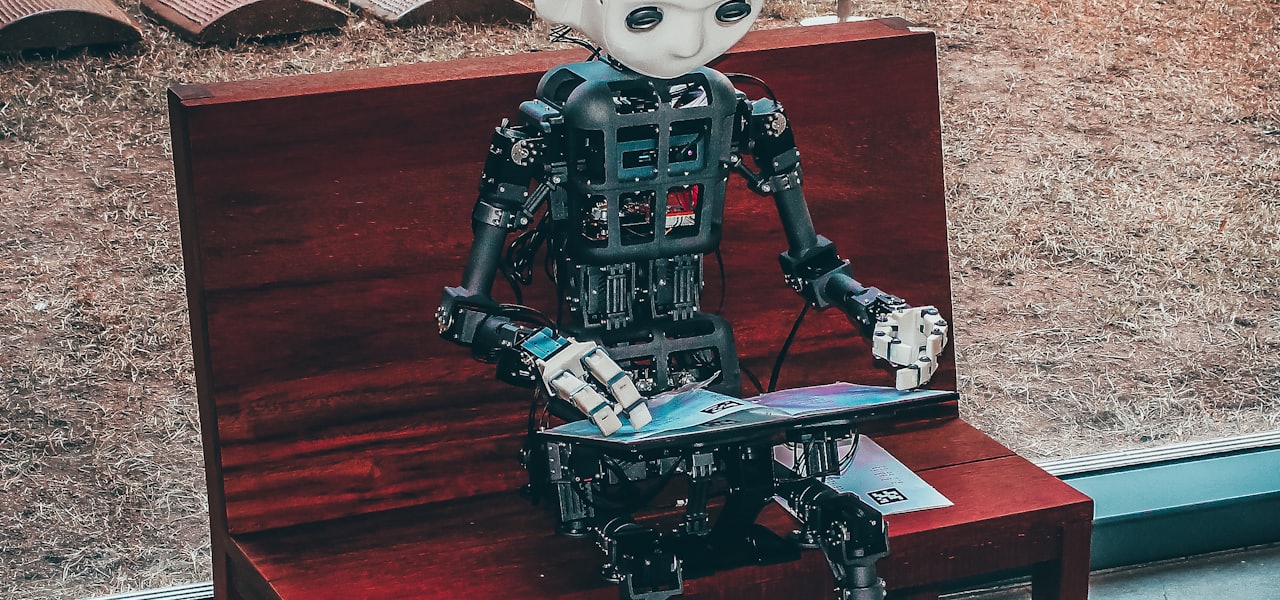
An automated restaurant or robotic restaurant is a restaurant that uses robots to do tasks such as delivering food and drink to the tables or cooking the food. Restaurant automation means the use of a restaurant management system to automate some or occasionally all of the major operations of a restaurant establishment. More recently, restaurants are opening that have completely or partially automated their services. These may include: taking orders, preparing food, serving, and billing. A few fully automated restaurants operate without any human intervention whatsoever. Robots are designed to help and sometimes replace human labour (such as waiters and chefs). The automation of restaurants may also allow for the option for greater customization of an order. == History == === Vending machines === In the late 19th and early 20th century a number of restaurants served food solely through vending machines. These restaurants were called automats or, in Japan, shokkenki. Customers ordered their food directly through the machines. === Sushi conveyors === Yoshiaki Shiraishi is a Japanese innovator who is known for the creation of conveyor belt sushi. He had the idea following difficulty staffing his small sushi restaurant and managing the restaurant on his own. He was inspired seeing beer bottles on a conveyor belt in an Asahi brewery. Yoshiaki's restaurants are an early example of restaurant automation; they used a conveyor belt to distribute dishes around the restaurant, eliminating the need for waiters. This example of automation dates back to the Japanese economic miracle; the first of Yoshiaki's conveyor belt sushi restaurants was opened under the name Mawaru Genroku Sushi in 1958, in Osaka. === Partial automation === As of 2011, across Europe, McDonald's had already begun implementing 7,000 touch screen kiosks that could handle cashiering duties. From 2015 to 2020, Zume had an automated pizza parlor. Later companies would try to produce smaller, less ambitious devices, with one robotics company producing a machine that could automate the slowest and most repetitive parts of assembling a pizza, such as spreading pizza sauce or placing slices of pepperoni, while leaving other customizations to employees. In 2020, a restaurant in the Netherlands began trialling the use of a robot to serve guests. In September 2021, Karakuri's 'Semblr' food service robot served personalised lunches for the 4,000 employees of grocery technology solutions provider ocado Group's head offices in Hatfield, UK. 2,700 different combinations of dishes were on offer. Customers could specify in grams what hot and cold items, proteins, sauces and fresh toppings they wanted. In 2021, Columbia University School of Engineering and Applied Science engineers developed a method of cooking 3D printed chicken with software-controlled robotic lasers. The “Digital Food” team exposed raw 3D printed chicken structures to both blue and infrared light. They then assessed the cooking depth, colour development, moisture retention and flavour differences of the laser-cooked 3D printed samples in comparison to stove-cooked meat. In June 2022 a California nonprofit chain of residential communities, Front Porch, experimented with robots in dining rooms at two locations to supplement wait staff by carrying plated food and drink to tables, and removing dishes. 65% of residents found the robots helpful, with 51% saying they let the staff spend more quality time with diners. 51% of staff were "excited" and 58% said they enabled more quality time with diners. The chain has 19 senior living communities (and 35 affordable housing communities), so it has potential to expand robots to more dining rooms. It is shifting to memory care, which may affect plans. == Rationales == === Advantages === Efficiency: Automated restaurants can significantly enhance operational efficiency by minimizing human error and reducing service time. With automated ordering, payment, and food preparation systems, customers can enjoy faster service and reduced waiting times. Cost savings: By reducing the need for human staff, automated restaurants can potentially lower labor costs. This can be particularly beneficial in areas with high labor expenses, as it allows for better resource allocation and cost management. Consistency: Automation ensures consistency in food quality and presentation. With precise portion control and standardized cooking methods, customers can expect the same quality and taste in their meals every time they visit. Enhanced customer experience: Self-service kiosks and automated systems provide customers with control and convenience. They can customize their orders, browse through menu options, and pay seamlessly, creating a more interactive and satisfying dining experience. === Disadvantages === Lack of personal touch: Automated restaurants may lack the personal interaction and warmth that traditional restaurants provide. Some customers prefer the human touch, personalized recommendations, and the social aspect of dining out. Technical issues: Reliance on technology means that technical glitches and malfunctions can occur, resulting in service disruptions or delays. Maintenance and technical support become critical in ensuring smooth operations. Limited menu complexity: The automation process may be better suited for standardized menu items rather than complex or customized dishes. The ability to cater to unique dietary preferences or accommodate special requests may be limited. Employment implications: Automated restaurants may result in job losses for traditional restaurant staff, potentially impacting the local workforce. It is important to consider the social and economic implications of adopting such technology. == Locations == Automated restaurants have been opening in many countries. Examples include: Nala Restaurant in Naperville, Illinois Fritz's Railroad Restaurant in Kansas City, Kansas Výtopna, a Railway Restaurant using model trains: franchise of various restaurants and coffeehouses in the Czech Republic Bagger's Restaurant in Nuremberg, Germany FuA-Men Restaurant, a ramen restaurant located in Nagoya, Japan Fōster Nutrition in Buenos Aires, Argentina Dalu Robot Restaurant in Jinan, China Haohai Robot Restaurant in Harbin, China Robot Kitchen Restaurant in Hong Kong Robo-Chef restaurant in Tehran, Iran, started in 2017, is the first robotic and "waiterless" restaurant of the Middle East. MIT graduates opened Spyce Kitchens in downtown Boston, Massachusetts, in 2018 Foodom, under Country Garden Holdings, opened January 12, 2020, in Guangzhou, China Robot Chacha, the first robot restaurant of India, is planning to open in the capital city of New Delhi. Kura Revolving Sushi Bar, with a number of locations in the United States, uses a tablets at tables for ordering, a conveyor belt to deliver food, and robots to deliver drinks and condiments. Chipotle Mexican Grill is beginning to deploy the Hyphen Makeline, which assembles up to 350 bowls and salads automatically per hour, and Chippy, an automatic tortilla chip fryer made by Miso Robotics. Serious Dumplings in Boca Raton, Florida
Artipic
Artipic is a graphics editor developed for Microsoft Windows. An older version for macOS is still available but unsupported. Artipic features drawing, editing, retouching, transforming and composing images including color corrections, effects and layer-based operations. It converts all common image formats and imports camera raw formats. In the global image editing ecosystem Artipic can be positioned somewhere in the middle. It differs from simple free photo editors by more advanced capabilities, however it does not cover the complete professional-level functionality pack provided by industry leaders like Adobe Photoshop. == History == Artipic developed by Swedish company Artipic AB. Artipic 1.0 was released in March 2014 as a free version. The first commercial version on Microsoft Windows was released in November 2014, on macOS – in October 2015. == Features == Supports Microsoft Windows and macOS Standard tools: select, crop, move, rotate, transform, stamp, color picking, text Advanced tools: custom brushes, gradients, shapes, paths, layers and masks Special tools: healing brush, red-eye effect reduction, dodge and burn brushes Adjustments: Brightness & Contrast, Hue & Saturation, Curves, Levels, Color Balance, Gamma Correction, Exposure, Color Temperature, Tint, Color Enhancer, Photo Filter Simulation, Posterization, Thresholding Filters: Smoothen, Sharpen, Vignetting, High-pass, Diffuse Glow, Shadow, Gaussian Blur Reversible (non-destructive) stylization presets Batch processing White balance RAW-converter including Gray Card Adobe Photoshop images supported == Version history ==
Automation
Automation describes a wide range of technologies that reduce human intervention in processes, mainly by predetermining decision criteria, subprocess relationships, and related actions, as well as embodying those predeterminations in machines. Automation has been achieved by various means including mechanical, hydraulic, pneumatic, electrical, electronic devices, and computers, usually in combination. Complicated systems, such as modern factories, airplanes, and ships typically use combinations of all of these techniques. The benefits of automation includes labor savings, reducing waste, savings in electricity costs, savings in material costs, and improvements to quality, accuracy, and precision. Automation includes the use of various equipment and control systems such as machinery, processes in factories, boilers, and heat-treating ovens, switching on telephone networks, steering, stabilization of ships, aircraft and other applications and vehicles with reduced human intervention. Examples range from a household thermostat controlling a boiler to a large industrial control system with tens of thousands of input measurements and output control signals. In the simplest type of an automatic control loop, a controller compares a measured value of a process with a desired set value and processes the resulting error signal to change some input to the process, in such a way that the process stays at its set point despite disturbances. This closed-loop control is an application of negative feedback to a system. The mathematical basis of control theory began in the 18th century and advanced rapidly in the 20th. The term automation, inspired by the earlier word automatic (coming from automaton), was not widely used before 1947, when Ford established an automation department. It was during this time that the industry was rapidly adopting feedback controllers, Technological advancements introduced in the 1930s revolutionized various industries significantly. The World Bank's World Development Report of 2019 shows evidence that the new industries and jobs in the technology sector outweigh the economic effects of workers being displaced by automation. Job losses and downward mobility blamed on automation have been cited as one of many factors in the resurgence of nationalist, protectionist and populist politics in the US, UK and France, among other countries since the 2010s. == History == === Early history === It was a preoccupation of the Greeks and Arabs (in the period between about 300 BC and about 1200 AD) to keep an accurate track of time. In Ptolemaic Egypt, about 270 BC, Ctesibius described a float regulator for a water clock, a device not unlike the ball and cock in a modern flush toilet. This was the earliest feedback-controlled mechanism. The appearance of the mechanical clock in the 14th century made the water clock and its feedback control system obsolete. The Persian Banū Mūsā brothers, in their Book of Ingenious Devices (850 AD), described a number of automatic controls. Two-step level controls for fluids, a form of discontinuous variable structure controls, were developed by the Banu Musa brothers. They also described a feedback controller. The design of feedback control systems up through the Industrial Revolution was by trial-and-error, together with a great deal of engineering intuition. It was not until the mid-19th century that the stability of feedback control systems was analyzed using mathematics, the formal language of automatic control theory. The centrifugal governor was invented by Christiaan Huygens in the seventeenth century, and used to adjust the gap between millstones. === Industrial Revolution in Western Europe === The introduction of prime movers, or self-driven machines advanced grain mills, furnaces, boilers, and the steam engine created a new requirement for automatic control systems including temperature regulators (invented in 1624; see Cornelius Drebbel), pressure regulators (1681), float regulators (1700) and speed control devices. Another control mechanism was used to tent the sails of windmills. It was patented by Edmund Lee in 1745. Also in 1745, Jacques de Vaucanson invented the first automated loom. Around 1800, Joseph Marie Jacquard created a punch-card system to program looms. In 1771 Richard Arkwright invented the first fully automated spinning mill driven by water power, known at the time as the water frame. An automatic flour mill was developed by Oliver Evans in 1785, making it the first completely automated industrial process. A centrifugal governor was used by Mr. Bunce of England in 1784 as part of a model steam crane. The centrifugal governor was adopted by James Watt for use on a steam engine in 1788 after Watt's partner Boulton saw one at a flour mill Boulton & Watt were building. The governor could not actually hold a set speed; the engine would assume a new constant speed in response to load changes. The governor was able to handle smaller variations such as those caused by fluctuating heat load to the boiler. Also, there was a tendency for oscillation whenever there was a speed change. As a consequence, engines equipped with this governor were not suitable for operations requiring constant speed, such as cotton spinning. Several improvements to the governor, plus improvements to valve cut-off timing on the steam engine, made the engine suitable for most industrial uses before the end of the 19th century. Advances in the steam engine stayed well ahead of science, both thermodynamics and control theory. The governor received relatively little scientific attention until James Clerk Maxwell published a paper that established the beginning of a theoretical basis for understanding control theory. === 20th century === Relay logic was introduced with factory electrification, which underwent rapid adaptation from 1900 through the 1920s. Central electric power stations were also undergoing rapid growth and the operation of new high-pressure boilers, steam turbines and electrical substations created a great demand for instruments and controls. Central control rooms became common in the 1920s, but as late as the early 1930s, most process controls were on-off. Operators typically monitored charts drawn by recorders that plotted data from instruments. To make corrections, operators manually opened or closed valves or turned switches on or off. Control rooms also used color-coded lights to send signals to workers in the plant to manually make certain changes. The development of the electronic amplifier during the 1920s, which was important for long-distance telephony, required a higher signal-to-noise ratio, which was solved by negative feedback noise cancellation. This and other telephony applications contributed to the control theory. In the 1940s and 1950s, German mathematician Irmgard Flügge-Lotz developed the theory of discontinuous automatic controls, which found military applications during the Second World War to fire control systems and aircraft navigation systems. Controllers, which were able to make calculated changes in response to deviations from a set point rather than on-off control, began being introduced in the 1930s. Controllers allowed manufacturing to continue showing productivity gains to offset the declining influence of factory electrification. Factory productivity was greatly increased by electrification in the 1920s. U.S. manufacturing productivity growth fell from 5.2%/yr 1919–29 to 2.76%/yr 1929–41. Alexander Field notes that spending on non-medical instruments increased significantly from 1929 to 1933 and remained strong thereafter. The First and Second World Wars saw major advancements in the field of mass communication and signal processing. Other key advances in automatic controls include differential equations, stability theory and system theory (1938), frequency domain analysis (1940), ship control (1950), and stochastic analysis (1941). Starting in 1958, various systems based on solid-state digital logic modules for hard-wired programmed logic controllers (the predecessors of programmable logic controllers [PLC]) emerged to replace electro-mechanical relay logic in industrial control systems for process control and automation, including early Telefunken/AEG Logistat, Siemens Simatic, Philips/Mullard/Valvo Norbit, BBC Sigmatronic, ACEC Logacec, Akkord Estacord, Krone Mibakron, Bistat, Datapac, Norlog, SSR, or Procontic systems. In 1959 Texaco's Port Arthur Refinery became the first chemical plant to use digital control. Conversion of factories to digital control began to spread rapidly in the 1970s as the price of computer hardware fell. === Significant applications === The automatic telephone switchboard was introduced in 1892 along with dial telephones. By 1929, 31.9% of the Bell system was automatic. Automatic telephone switching originally used vacuum tube amplifiers and electro-mechanical switches, which consumed a large amount of electricity. Call volume eve